Teej in Jaipur
July–August, on the third day of the bright half of Shravan (lunar calendar)
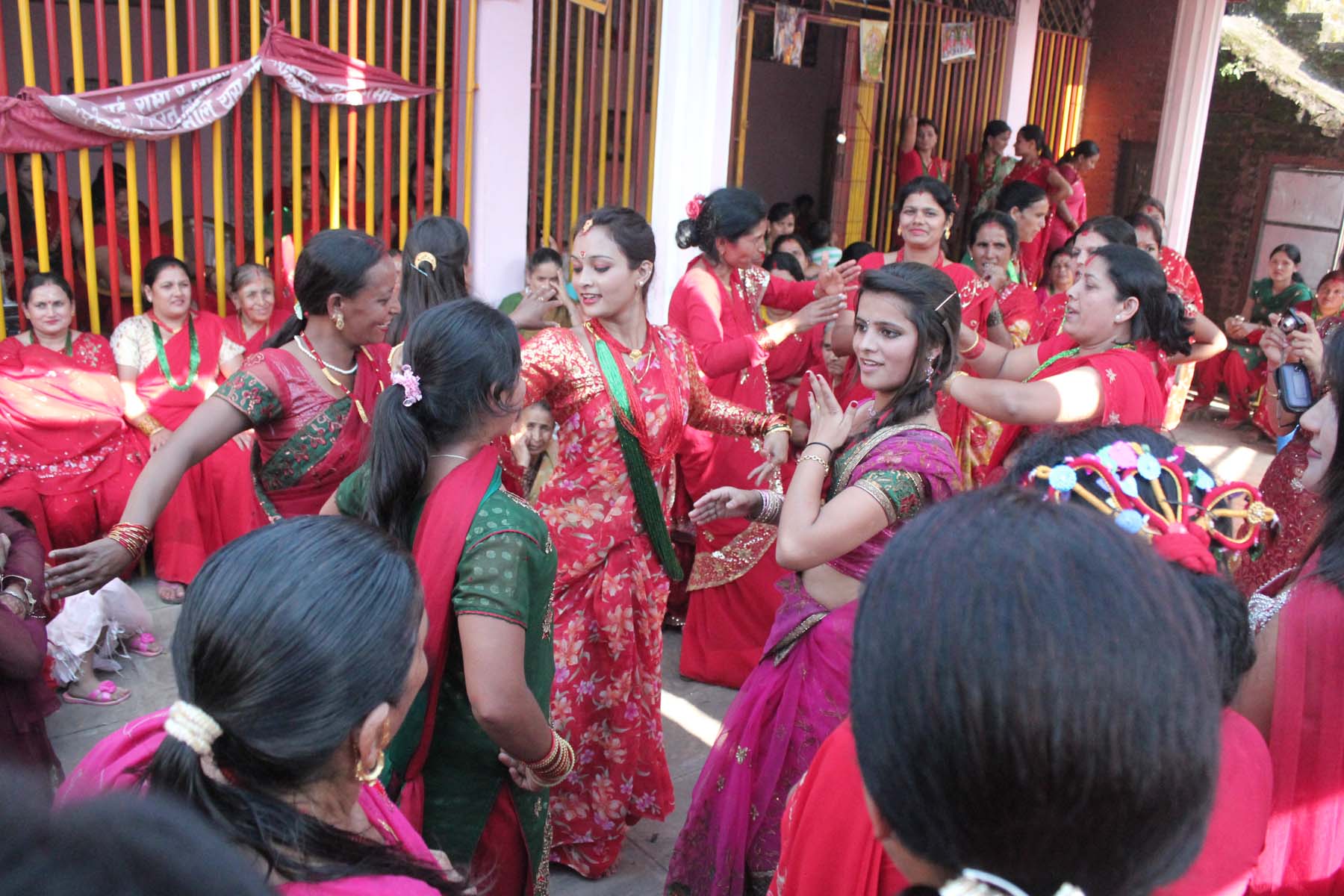
Hariyali Teej, the green Teej, falls in the month of Shravan, when the monsoon has broken over Rajasthan. Women fast, wear new clothes in shades of green, apply henna and sing on swings hung from trees. The festival celebrates the reunion of Shiva and Parvati and is one of the most visible religious events of the year in Jaipur.
The goddess Teej Mata is carried from the City Palace in a procession on two consecutive evenings, with decorated animals, bands and dancers, through the old city lanes. Bundi celebrates Kajli Teej a little later, in the month of Bhadrapad, with its own fair. Dates follow the lunar calendar and processions can be shortened in heavy rain, so check current status before you travel.
Monsoon travel in Rajasthan is quieter and cheaper, the land turns green, and hotel rates fall. We pair Teej in Jaipur with Udaipur, whose lakes fill in a good rain year, and with Bundi for its stepwells and Kajli Teej. Pack a light rain layer and expect humid afternoons around 30–34 °C.
How to do it well
- Book a balcony on the procession route through the old city
- Wear or buy leheriya, the tie-dyed cloth associated with the season
- Plan indoor sights for the afternoons, when rain is most likely
Questions travellers ask
Good to know
When is Teej celebrated in Jaipur
Hariyali Teej falls on the third day of the bright half of Shravan, usually in late July or August. The royal procession runs on Teej and the following day. Dates follow the lunar calendar and are confirmed each year, so check current status before you travel.
What is the difference between Teej and Kajli Teej
Hariyali Teej, in Shravan, is the main festival in Jaipur and much of Rajasthan. Kajli Teej comes about two weeks later, in Bhadrapad, and is celebrated with particular energy in Bundi, which holds a fair around it. Both honour Parvati and the rains.
Is it worth visiting Rajasthan in the monsoon for Teej
For repeat visitors and photographers, yes. Crowds are thin, hotels offer better rates, and the hills around Udaipur and Bundi turn green. Ranthambore's main zones are closed in this season, and some desert camps shut, so build the route around cities and lakes.
What should I wear for Teej
Light cotton in green or in leheriya, the wave-patterned tie-dye of the season, is what local women wear and visitors often buy. Cover shoulders and knees in the old city and at temples. Bring sandals that cope with wet streets and a compact umbrella.
Festival journeys
Routes built around the calendar
