Kerala
Kerala is a narrow green state on India's south-west coast, about 580 km long, where you can wake in a tea estate at 1,600 m, spend the next night on a private houseboat and finish on a quiet beach. October to March is the best window; June to August is the classic season for Ayurveda.
- No payment to startPay a deposit only when you book
- Itemised written quoteEvery hotel, car and guide listed
- One plannerFrom first call to last transfer
- Change anythingEvery route is a starting point
Kerala, in brief


Kerala runs about 580 km from the Karnataka border in the north to Tamil Nadu in the south, squeezed between the Arabian Sea and the Western Ghats. The width is rarely more than 120 km, so the drive from a beach to a tea estate at 1,600 m takes four or five hours. That compression is the reason Kerala works so well for a private journey: three very different landscapes, one short car ride apart, and almost no internal flights needed.
We plan most first trips around a loop from Kochi. Two nights in Fort Kochi for the Portuguese, Dutch and Jewish layers of the old port; two or three in Munnar among the Kanan Devan tea estates; two in Thekkady for the Periyar Tiger Reserve and the cardamom gardens; then down to the Vembanad backwaters for a lake resort and a night on a private kettuvallam, and a final few days at Marari or Kovalam on the coast.
There is a second Kerala that fewer visitors see. North of Kozhikode, the Malabar coast has its own food, its own Muslim and Hindu trading history, and from late October to May the Theyyam rituals of Kannur and Kasaragod, performed through the night in village shrines. Inland, Wayanad is coffee and pepper country with elephants in the Muthanga forest. We combine these with Bekal on the coast for a journey that feels very different from the southern loop.
Kerala is also the home of classical Ayurveda. Serious treatment needs a minimum of 14 days with a doctor's daily consultation, and the best centres sit around Kovalam and in the Palakkad gap. The monsoon months, when the air is cool and damp, are considered ideal for this work by Kerala's practitioners. For everyone else, October to March brings dry days of 23–32 °C on the coast and crisp nights in the hills.
Why go
Reasons to go, plainly
A rice barge converted into a floating suite, with your own crew and cook, drifting through the canals of Kuttanad where the paddy fields sit below sea level. We book only premium boats we have inspected, with one or two bedrooms, and always as a single-party charter.
Tea covers almost every slope around Munnar, from about 1,500 m to above 2,000 m. Walk the estates with a planter in the morning, watch the leaf processed in a working factory, and drive up to Top Station for the view down into Tamil Nadu.
Five centuries of traders left their marks on one small peninsula: the Chinese fishing nets, a Portuguese church where Vasco da Gama was first buried, the Dutch Palace murals and the 1568 Paradesi Synagogue. Stay in a restored warehouse on the harbour and walk it all.
The Periyar Tiger Reserve covers about 925 km² around a lake made by an 1895 dam. Elephants, gaur and otters are seen far more often than tigers. A full day of bamboo rafting with forest guards is the best way in.
From late October to May, villages in Kannur and Kasaragod hold all-night rituals where a performer, painted and crowned, becomes the deity for a few hours. We find the night's performances through local contacts and go with a guide who explains what is happening.
Kerala's family lineages of Ayurvedic physicians still run hospitals and retreats here. We place guests at proven centres around Kovalam and Palakkad for programmes of 7 to 21 days, with doctor consultations, daily treatments and a diet set for you.
The map
Where to go in Kerala
- 1Alappuzha (Alleppey)
- 2Bekal
- 3Kannur
- 4Fort Kochi
- 5Kovalam
- 6Kumarakom
- 7Marari
- 8Munnar
- 9Thekkady (Periyar)
- 10Thrissur
- 11Varkala
- 12Wayanad
Houseboats, Kuttanad paddy and the snake-boat races

A sea fort, quiet backwaters and Kerala's far north

Theyyam country, looms and the old Malabar forts
Five centuries of spice traders on one small peninsula

Crescent beaches, Ayurveda retreats and the old capital
Lake resorts and bird life on the shore of Vembanad

A fishing village beach between Kochi and the backwaters
Tea estates, cool mornings and the Nilgiri tahr
Periyar's forests, a dammed lake and cardamom hills

Kerala's cultural capital, temples and the great Pooram

Red laterite cliffs above a pilgrim beach

Coffee, pepper and elephant forest on the high plateau
Shape your own journey Tell us your dates and what you hope to feel. We draw the route around you. Begin Not sure where to start? We match the land to your month, your pace and the people travelling with you. Begin Talk to a planner A first route and an indicative price within one working day. No payment to start. BeginJourneys
Routes through Kerala
Indicative prices per person, twin sharing, at the hotels named. Every route can be changed.
Experiences
Hours worth planning around


Where we book
Stays in Kerala

A heritage hotel on the Fort Kochi waterfront, rebuilt on the site of a Victorian boatyard, where every room faces the harbour channel and ships pass …
A small, art-filled heritage hotel in a restored 18th-century house beside Parade Ground in Fort Kochi, with a courtyard pool and a quiet, personal style. It …
A working cardamom and coffee plantation at Pothamedu, about 3 km from Munnar town, with cottages and a planter's bungalow set on a hillside facing the …
A CGH Earth resort of thatched cottages among spice gardens on the edge of the Periyar Tiger Reserve, built in the style of the area's tribal …

A CGH Earth resort on the shore of Vembanad Lake, reached only by boat, built from old Kerala wooden houses dismantled and reassembled on the site, …

A large lakeside resort on Vembanad with traditional Kerala-style villas and pool villas along a long winding pool, a respected Ayurveda centre and its own jetty …
A CGH Earth beach resort in coconut groves behind Marari beach, with thatched villas modelled on fishermen's cottages, some with private pools, an organic farm, an …
A large clifftop resort above Hawa Beach at Kovalam, with sea-facing rooms, an infinity pool looking over the Arabian Sea, a private beach below and an …
A Taj resort on the backwaters behind Kappil beach near Bekal Fort, with villas inspired by Kerala houseboats, many with private pools, a large spa and …
Shape your own journey Tell us your dates and what you hope to feel. We draw the route around you. Begin Not sure where to start? We match the land to your month, your pace and the people travelling with you. Begin Talk to a planner A first route and an indicative price within one working day. No payment to start. BeginMonth by month
Kerala through the year
Kerala by travel style
The calendar
Festivals worth the dates

Onam is Kerala's harvest festival and its biggest celebration, ten days in August or September ending on Thiruvonam, when homes lay flower …

Thrissur Pooram is Kerala's most spectacular temple festival, held in April or May around the Vadakkunnathan temple, when two rival temple groups …

The Nehru Trophy Boat Race is Kerala's best-known snake-boat race, held on Punnamada Lake in Alappuzha, usually on the second Saturday of …
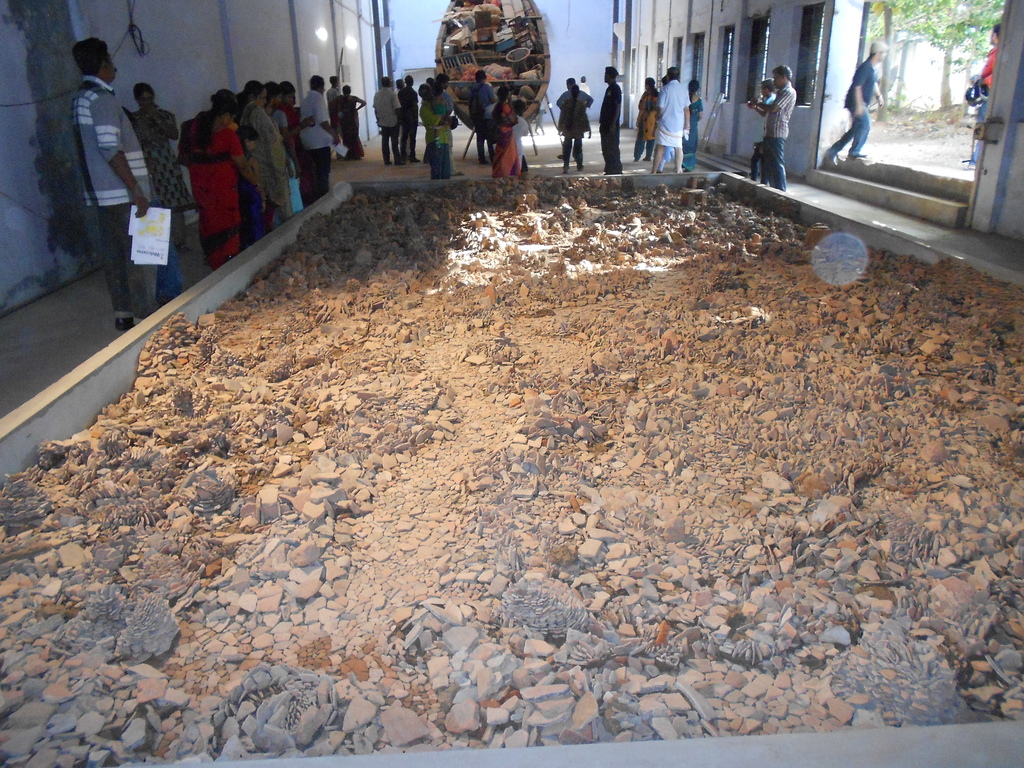
The Kochi-Muziris Biennale is India's largest exhibition of contemporary art, first held in 2012 and staged roughly every two years from December …
Theyyam is the ritual performance of North Malabar, held in village shrines in Kannur and Kasaragod from late October to May, in …

Attukal Pongala is a festival of women in Thiruvananthapuram, 16 km from Kovalam, when very large numbers of women cook a sweet …
Shape your own journey Tell us your dates and what you hope to feel. We draw the route around you. Begin Not sure where to start? We match the land to your month, your pace and the people travelling with you. Begin Talk to a planner A first route and an indicative price within one working day. No payment to start. BeginGetting there
Arriving in Kerala
Kochi International Airport (COK) is the main gateway, with direct flights from the Gulf, Singapore, Kuala Lumpur, Colombo and most Indian metros; it sits 42 km from Fort Kochi, about 1.5 h by car. Thiruvananthapuram (TRV) suits journeys that start or end at Kovalam or Varkala, 15–50 km away. For the north, Kozhikode (CCJ) is best for Wayanad, Kannur (CNN) for Theyyam country, and Mangaluru (IXE) just across the Karnataka border is 70 km from Bekal. Inside Kerala we travel by private car with a driver; the coastal railway between Thiruvananthapuram, Kochi, Thrissur and Kannur is useful for longer hops. Flight routes change by season, so check current status before you travel.
Permits
Paperwork to know
No special permits are needed to travel anywhere in Kerala, for Indian or foreign nationals. Most foreign visitors arrive on an e-Visa, which Kochi, Thiruvananthapuram and Kozhikode airports accept. Wildlife areas such as Periyar, Eravikulam and Muthanga sell entry tickets and activity slots through the forest department, often online and in limited numbers; we book these for you. Many major temples, including Padmanabhaswamy, Guruvayur and Vadakkunnathan, admit only Hindus to the inner areas and enforce a dress code. Rules and ticket systems change, so check current status before you travel.
Guides
Read before Kerala
Two days is the right time for Fort Kochi. Spend the first on foot through the old port, from the Chinese fishing nets to …
For a first visit, spend ten days on a loop from Kochi: two nights in Fort Kochi, two in Munnar's tea hills, two at …
Ayurveda is India's classical system of medicine, practised in Kerala by qualified doctors through long family lineages. A real programme needs 14 to 21 …
The best time to visit Kerala is November to March, when the coast is dry and the hills are clear. December to February is …
Kerala food is built on rice, coconut, fish and spices, shaped by Hindu, Syrian Christian, Mappila Muslim and Jewish communities. Try appam and stew, …
Choose a single-party premium kettuvallam with one or two air-conditioned bedrooms, a trained crew and a route away from the busy Alappuzha jetties. One …
Kathakali is Kerala's classical dance-drama, told through make-up, hand gestures and eye movements to live drums and song; Kalaripayattu is its martial art, trained …
Theyyam is the ritual of North Malabar in which a hereditary performer becomes a local deity for a night. It is held in village …
Munnar is the heart of Kerala's tea country, with estates from about 1,500 m to above 2,000 m in the Western Ghats. Spend two …
Periyar Tiger Reserve, at Thekkady in the Cardamom Hills, is seen on foot and by water, not by jeep. Book full-day bamboo rafting or …
Shape your own journey Tell us your dates and what you hope to feel. We draw the route around you. Begin Not sure where to start? We match the land to your month, your pace and the people travelling with you. Begin Talk to a planner A first route and an indicative price within one working day. No payment to start. BeginQuestions travellers ask
Questions about Kerala
What is the best time to visit Kerala?
October to March is the best time for most travellers, with December to February the driest and most comfortable months on the coast. The hills around Munnar are pleasant almost all year except in the heavy monsoon of June and July. For Ayurveda, Kerala's doctors prefer June to August, when the cool, damp air is thought to help treatments work.
How many days do I need for Kerala?
Eight to ten nights covers the classic loop of Fort Kochi, Munnar, Thekkady, the Vembanad backwaters and a beach, with two nights in each place. Twelve to fourteen nights lets you add the north for Theyyam and Bekal, or slow down at the coast. A proper Ayurveda programme needs 14 to 21 nights on its own.
Is a houseboat night worth it?
Yes, if you choose the boat carefully and keep it to one night. A premium private kettuvallam with an air-conditioned bedroom, your own cook and a route away from the busiest stretch near Alappuzha is a memorable evening. Cruising stops around sunset by local rule and boats moor for the night, so we pair one houseboat night with two at a lake resort.
Should I stay in Kumarakom or Alleppey?
Kumarakom is better for a calm lake resort on the eastern shore of Vembanad, with the bird sanctuary next door and quieter water. Alappuzha (Alleppey) is the main houseboat hub, with the canals of Kuttanad and the Nehru Trophy course. We usually base guests at Kumarakom and start the houseboat from there to avoid the crowded jetties.
Is Kerala good for a honeymoon?
Very good. The pace is gentle, the drives are short and the rooms are private: a pool villa on the lake at Kumarakom, a hilltop cottage at Windermere in Munnar, a single-party houseboat and a beach villa at Marari. October to March is the best window. We keep the itinerary to four bases so you spend more time at each.
Can I see tigers in Periyar?
Tiger sightings in Periyar are rare because the forest is dense and the reserve is visited by boat and on foot rather than by open jeep. What you can expect is elephants at the lake edge, gaur, sambar, wild boar, otters, Nilgiri langur and a long bird list. For tigers, central Indian parks are far better; Periyar is about the forest itself.
Is Kerala safe for travellers?
Kerala is one of India's safest and most literate states, and violent crime against visitors is rare. The real risks are natural: rough seas on beaches during the monsoon, landslides on hill roads after very heavy rain, and leeches on forest walks. We track weather alerts during the season and change routes when needed.
What should I wear in Kerala?
Light cotton and linen for the coast, a warm layer for Munnar evenings, which can drop to 10 °C in winter, and closed shoes for forest walks. Temples have strict dress codes: men often need to remove shirts and wear a dhoti, and women should wear a sari, long skirt or salwar. Swimwear is fine at resort pools and beaches only.
Do I need a permit to travel in Kerala?
No. There are no inner line or restricted area permits anywhere in Kerala for Indian or foreign travellers. You only need tickets for national parks, wildlife sanctuaries and some monuments, which are often sold online in limited daily slots. We book these with your itinerary. Check current status before you travel, as ticketing systems change.