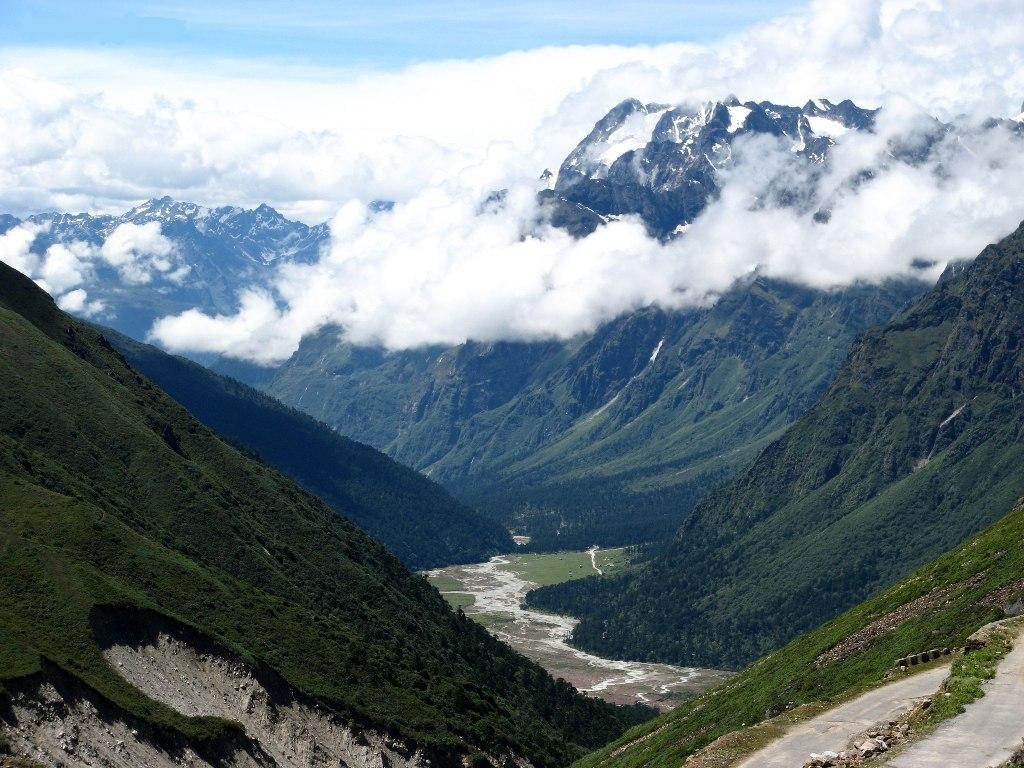
Zero Point at the snowline

Beyond Yumthang the road continues north, climbing steeply through the last trees into a stark landscape of rock, scree and snow. Yumesamdong, often called Zero Point because civilian road access ends there, lies at about 4,700 m. For much of the year it is covered in snow, and even in summer snow patches lie close to the road.
The scenery is dramatic, and for many Indian travellers it is their first experience of deep snow. But the altitude is serious. We only go after at least one night in Lachung, start early, keep the stop to 30 minutes or less, and turn back at any sign of altitude sickness. Children, older travellers and anyone with heart or breathing conditions should stay at Yumthang.
Access to Zero Point is controlled and requires the correct permit, with extra charges for the road beyond Yumthang. Snow and road damage can close it without notice, and foreign nationals may face additional restrictions. We confirm the situation on the day, and plan Yumthang as the main outing.
Questions travellers ask
Good to know
How high is Zero Point in Sikkim?
Yumesamdong, known as Zero Point, is at about 4,700 m, well above Yumthang Valley at about 3,560 m. It is where civilian road access ends. Visit only after acclimatising at Lachung, and limit your time there.
Is Zero Point open all year?
No. Access depends on snow, road conditions and permits, and it can close without notice, especially in winter and during the monsoon. Even when open, mornings are best before weather changes. Check current status before you travel.
Is Zero Point safe for children?
The altitude of about 4,700 m makes it risky for young children, older travellers and anyone with heart or breathing conditions. We recommend that families stop at Yumthang, which is lower and still spectacular. Always descend at the first sign of altitude sickness.
Also in Lachung and Yumthang, North Sikkim
More hours to plan around