Kumbhalgarh
A mountain fort, its great wall and the Ranakpur temple

Rana Kumbha of Mewar built Kumbhalgarh in the 15th century on a ridge of the Aravalli, about 1,100 m above sea level, as a refuge for the kingdom. Its walls run for around 36 km over the hills, wide enough in places for several horses abreast, and enclose hundreds of temples, palaces and farms. The fort was taken only rarely in its history.
Kumbhalgarh is the birthplace of Maharana Pratap, Mewar's most famous ruler, and part of the Hill Forts of Rajasthan World Heritage listing. Around it lies the Kumbhalgarh Wildlife Sanctuary, a forest of dry deciduous trees home to leopards, sloth bears, wolves and many birds. To the west, the hills drop to the plains of Marwar, and the Ranakpur Jain temple sits in a valley about 50 km away.
We use Kumbhalgarh as a night between Udaipur and Jodhpur or Jawai, or as a full day from Udaipur. The fort at sunset, the temple at Ranakpur in the morning light and, for walkers, a trek through the sanctuary from the fort down to Ranakpur, are the reasons to stay. The air is cooler here than on the plains.
Highlights
What Kumbhalgarh does best
The fort's walls run about 36 km over the Aravalli ridges, among the longest continuous walls in the world. Walk a section in the late afternoon for views over forest and plains.
The palace of the clouds at the top of the fort has painted rooms and terraces with views in every direction. On a clear winter day you can see far across the plains of Marwar.
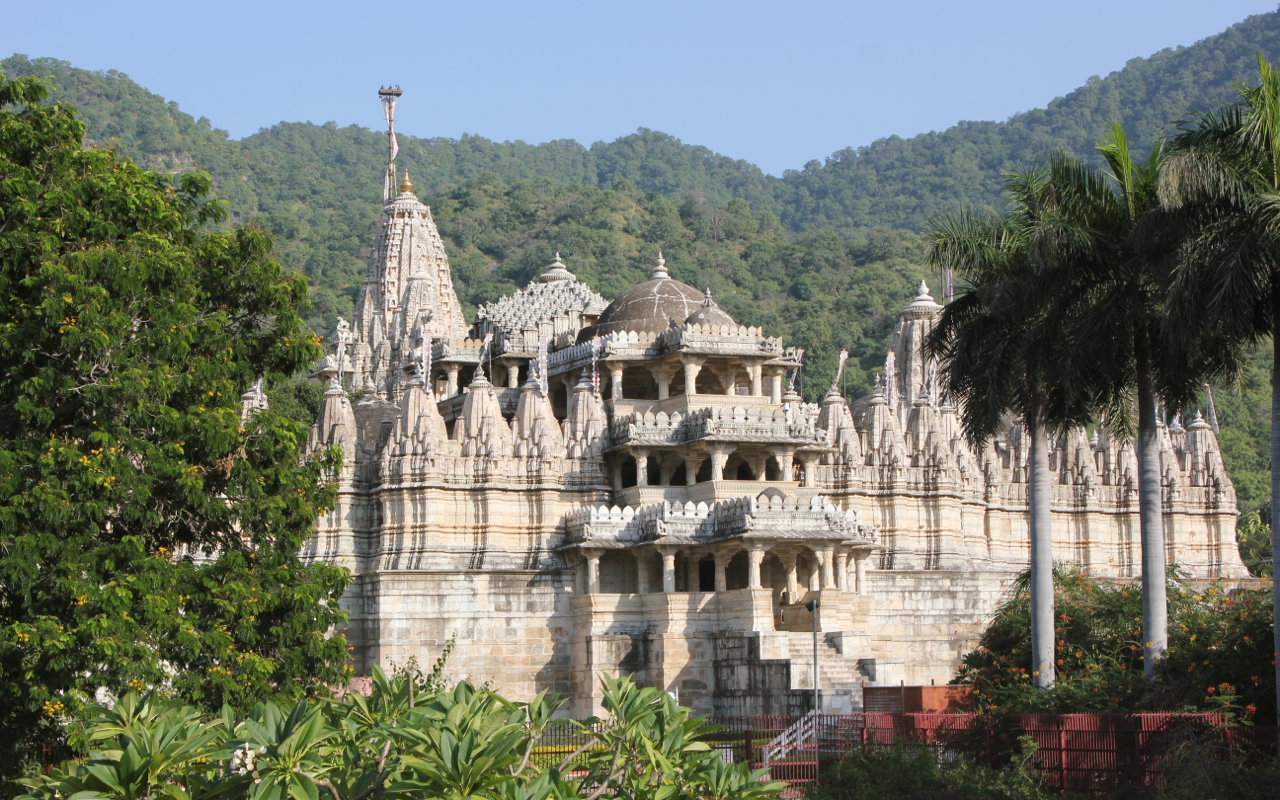
A 15th-century marble temple to Adinath with more than 1,400 carved pillars, no two alike, set in a forested valley. It is one of the most beautiful buildings in India.
A walk through the Kumbhalgarh sanctuary from the fort down to Ranakpur, through forest and villages, for fit walkers with a guide and permission. It takes most of a day.
As the sun sets, the walls glow and the fort is lit in the evening. A light and sound show has been held at the fort; check current status before you travel.
Experiences
Four hours to plan around


Getting there
How to reach Kumbhalgarh
Udaipur's Maharana Pratap Airport (UDR) is about 100 km away, around 2.25 hours by car. Jodhpur airport (JDH) is about 200 km, 4 hours.
Falna and Rani stations on the Delhi–Ahmedabad line are the nearest useful railheads, each about 1.5–2 hours by road. Most guests arrive by car.
Udaipur is about 85 km, 2 hours. Ranakpur is about 50 km, 1.25 hours. Jodhpur is about 200 km, 4 hours, and Jawai about 100 km, 2 hours.
Where to stay
Rooms we book
The Aodhi, a heritage-style hotel of stone and wood just below the fort gates, is the most comfortable and best placed stay at Kumbhalgarh, with views into the hills and the sanctuary. A few smaller resorts sit on the roads around the fort. Many of our guests visit Kumbhalgarh and Ranakpur on the drive between Udaipur and Jodhpur or Jawai, and stay at The Oberoi Udaivilas or SUJÁN Jawai instead.
From our planners
Five things to know
- Visit the fort in the late afternoon for the light on the walls, or early morning for quiet
- Ranakpur temple usually opens to non-Jain visitors from midday; check current status before you travel
- Leather items, including belts and wallets, are not allowed inside Ranakpur temple
- The trek to Ranakpur needs forest department permission and a local guide
- Bring a warm layer; evenings at Kumbhalgarh are cooler than Udaipur
Questions travellers ask
Questions about Kumbhalgarh
Is Kumbhalgarh worth visiting
Yes. Its walls, hilltop setting and views make it one of the most impressive forts in India, and Ranakpur temple nearby is among the most beautiful buildings in the country. It is less visited than Amber or Mehrangarh. We suggest at least one night, so you can walk the walls at sunset and reach Ranakpur without rushing.
How far is Kumbhalgarh from Udaipur
About 85 km, 2 hours by car through the Aravalli hills. A day trip from Udaipur can include both Kumbhalgarh and Ranakpur, but it is long; one night at Kumbhalgarh makes it easier. Udaipur airport is about 100 km, around 2.25 hours. We usually leave Udaipur after breakfast, stop at Ranakpur at midday and reach the fort for the late afternoon light.
Can you combine Kumbhalgarh and Ranakpur in one day
Yes. They are about 50 km apart, 1.25 hours by car. Visit Ranakpur at midday when it opens to non-Jain visitors, then Kumbhalgarh in the afternoon for the light on the walls. Allow about three hours at the fort, and expect a full day with the drive. Temple hours for visitors change, so check current status before you travel.
Where should I stay near Kumbhalgarh
The Aodhi, just below the fort, is the most comfortable and best placed. Many travellers instead stay in Udaipur or at SUJÁN Jawai and visit Kumbhalgarh and Ranakpur on the drive between. The Aodhi is built of stone and wood just below the fort gates, with views into the hills and the sanctuary. A few smaller resorts sit on the roads around the fort. We choose based on your route.
What is the best time to visit Kumbhalgarh
October to March, when days are pleasant and evenings cool. The monsoon from July to September makes the hills green and misty, though paths can be slippery. April to June is hot, though cooler than the plains. We send walkers on the sanctuary trek only in the cooler months, and winter evenings at the fort call for a warm layer.
Was Maharana Pratap born at Kumbhalgarh
Yes. Maharana Pratap, the Mewar ruler famous for resisting the Mughal emperor Akbar, was born at Kumbhalgarh in 1540. The fort is closely tied to his story and to Mewar's resistance. His father, Udai Singh II, was raised here in hiding as an infant. The evening light and sound show, when running, tells this part of the history; check current status before you travel.
Is Kumbhalgarh Fort a World Heritage site
Yes. It is part of the Hill Forts of Rajasthan World Heritage listing, inscribed in 2013, along with Chittorgarh, Ranthambore, Gagron, Amber and Jaisalmer. Kumbhalgarh was built by Rana Kumbha in the 15th century about 1,100 m above sea level, and its walls run around 36 km over the ridges. It was taken only rarely in its history.
Are there wild animals in Kumbhalgarh sanctuary
Yes: leopards, sloth bears, wolves, jungle cats, sambar, four-horned antelope and many birds. Larger animals are shy. Jeep drives can be arranged in the sanctuary, subject to current rules. The forest is dry deciduous, on the slopes of the Aravalli around the fort. On foot you are more likely to see birds, langurs and perhaps deer. Check current status before you travel.
How do you get from Jodhpur to Kumbhalgarh
By car, about 200 km, 4 hours. Most guests stop at Ranakpur on the way. The road climbs from the plains of Marwar into the Aravalli hills in the final stretch. Jodhpur airport is about the same distance. We leave Jodhpur in the morning, reach Ranakpur when it opens to non-Jain visitors around midday, and arrive at the fort for sunset; check current status before you travel.
Journeys
Routes that stop in Kumbhalgarh


Nearby
Pair it with
Lakes, palaces and the slowest days in Rajasthan

Leopards on granite hills among herders and temples

The blue city below Mehrangarh Fort
A hilltop palace, a mountain railway and rural Mewar
Shape your own journey Tell us your dates and what you hope to feel. We draw the route around you. Begin Not sure where to start? We match the land to your month, your pace and the people travelling with you. Begin Talk to a planner A first route and an indicative price within one working day. No payment to start. Begin