Bikaner
A desert city of red forts, havelis and bhujia

Rao Bika, a son of Rao Jodha of Jodhpur, founded Bikaner in 1488 in a dry stretch of the Thar. The city grew rich on caravan trade and later on the careers of its rulers and merchants, and it became one of the most modern princely states under Maharaja Ganga Singh in the early 20th century, who brought a canal from the Punjab rivers to irrigate the desert.
Junagarh Fort is the main reason to come. Built at the end of the 16th century on the plain rather than a hill, it was rarely captured, and its palaces are unusually well kept, with painted rooms, lacquer work and gold leaf. In the old city, the red sandstone havelis built by merchant families in the late 19th and early 20th centuries are among the finest in Rajasthan.
Bikaner is less visited than Jaisalmer and Jodhpur, which is part of its pleasure. We use it as a stop between Shekhawati and Jaisalmer, or between Jaipur and the Thar. Allow one full day for the fort and old city, plus the camel research centre and, for those who are curious, the Karni Mata temple at Deshnoke, 30 km south.
Highlights
What Bikaner does best
A fort of red sandstone and marble built in the 1590s, with palaces added over three centuries. The Anup Mahal, gilded and lacquered, and the Badal Mahal, painted with blue clouds, are among the richest interiors in Rajasthan.
Merchant families built large havelis of red sandstone in the old city, decorated with carved balconies and, in some, European touches. The Rampuria havelis are the best known. A walk with a guide reveals courtyards behind plain gates.
A government research centre on the edge of the city breeds and studies camels, with a museum and herds of several breeds. Visit in the late afternoon, when the herds come in, and try camel milk products.
At Deshnoke, 30 km south, a temple to a local saint is home to thousands of rats, regarded as sacred. It is not for everyone, but it is a remarkable example of living belief in Rajasthan.
Bikaner gave its name to bhujia, the spiced gram flour snack sold across India. The old city's shops make it fresh daily, along with rasgulla and other sweets.
Experiences
Four hours to plan around


Getting there
How to reach Bikaner
Bikaner Nal Airport (BKB) has limited domestic flights, mainly from Delhi; check current status before you travel. Most guests arrive by road from Jaipur, Shekhawati or Jodhpur.
Bikaner Junction has trains from Delhi (overnight services take about 8–10 hours), Jaipur and Jodhpur. A limited service runs west towards Jaisalmer. Check current timetables before you travel.
Mandawa in Shekhawati is about 190 km, 3.5 hours. Jaipur is about 330 km, 5.5 hours. Jaisalmer is about 330 km, 5.5 hours, and Jodhpur about 250 km, 4.5 hours.
Where to stay
Rooms we book
Narendra Bhawan, the former residence of the last Maharaja of Bikaner turned into a boutique hotel, is our first choice, with a strong sense of character and a rooftop pool. Laxmi Niwas Palace, part of the Lalgarh Palace complex built in the early 20th century, offers large heritage rooms in red sandstone. Gajner Palace, a lakeside former hunting lodge about 32 km from the city, suits guests who want quiet. Bikaner is usually a one- or two-night stop.
From our planners
Five things to know
- Visit Junagarh in the morning, and take a guide; the rooms are best understood with stories
- Ask your guide to arrange a visit inside a family haveli rather than viewing from the street
- The camel research centre is best in the late afternoon when the herds return
- At the Karni Mata temple, shoes come off; wear thick socks if you plan to go in
- Buy bhujia fresh from an old shop in the city rather than packaged brands
Questions travellers ask
Questions about Bikaner
Is Bikaner worth visiting
Yes, if you are travelling between Shekhawati, Jaipur and Jaisalmer. Junagarh Fort has some of the finest interiors in Rajasthan, the red havelis are excellent and the city is far less crowded than Jaipur or Jodhpur. Allow one full day for the fort and old city, with the camel research centre in the late afternoon and fresh bhujia from an old shop.
How many days do you need in Bikaner
One night gives you time for Junagarh, the old city and the camel research centre. Two nights allows the Karni Mata temple and a slower pace at Narendra Bhawan or Gajner. Most journeys stop for one night. Gajner Palace, a lakeside former hunting lodge about 32 km from the city, suits guests who want quiet.
What is the best hotel in Bikaner
Narendra Bhawan, the former residence of the last Maharaja of Bikaner, for character and a boutique feel. Laxmi Niwas Palace, part of the Lalgarh Palace complex, for grand heritage rooms. Gajner Palace for a quiet lakeside setting outside the city.
How far is Bikaner from Jaisalmer
About 330 km, 5.5 hours by car through the Thar. It is a long drive, but the road is good and passes small desert towns. Most of our guests break it with a stop for lunch. Bikaner is less visited than Jaisalmer and Jodhpur, and we usually place it between Shekhawati and the Thar. Leave after an early breakfast to reach Jaisalmer in daylight.
What is Bikaner famous for
Junagarh Fort, red sandstone havelis, camels and the national camel research centre, the Karni Mata rat temple at Deshnoke, and Bikaneri bhujia, the spicy snack sold across India. Rao Bika founded the city in 1488, and Junagarh Fort holds some of the richest painted and lacquered interiors in Rajasthan. Buy bhujia fresh in the old city rather than packaged.
What is the best time to visit Bikaner
October to March, when days are 22–30 °C. December and January nights fall to around 5 °C. April to September is very hot, often above 40 °C, and is best avoided. We plan Junagarh in the morning and the old city walk and camel herds in the late afternoon, which uses the softest light of the day.
Is there a Camel Festival in Bikaner
Yes. Bikaner usually holds a Camel Festival in January, with camel decoration, races and folk performances. It is a busy time in a quiet city, so we book rooms at Narendra Bhawan, Laxmi Niwas Palace or Gajner Palace well ahead. Nights in January can fall to around 5 °C, so bring warm layers. Dates and programme change, so check current status before you travel.
Can you visit Bikaner from Jaipur
Bikaner is about 330 km, 5.5 hours from Jaipur, so a day trip is too long. Stay at least one night, ideally after a night in Shekhawati, which breaks the drive into two shorter stages. Mandawa is about 170 km from Jaipur, and from there Bikaner is about 190 km, 3.5 hours. We use the stop for the painted havelis.
Is Bikaner good for families
Yes. The fort's armoury and biplane, the camel research centre and camel milk ice cream appeal to children. Distances to and from Bikaner are long, so plan rest stops on the road. The old city walk is flat and short, and children usually enjoy tasting warm bhujia and rasgulla. Gajner Palace, a lakeside former hunting lodge, gives families space and quiet.
Journeys
Routes that stop in Bikaner


Nearby
Pair it with
Painted merchant towns of the northern desert
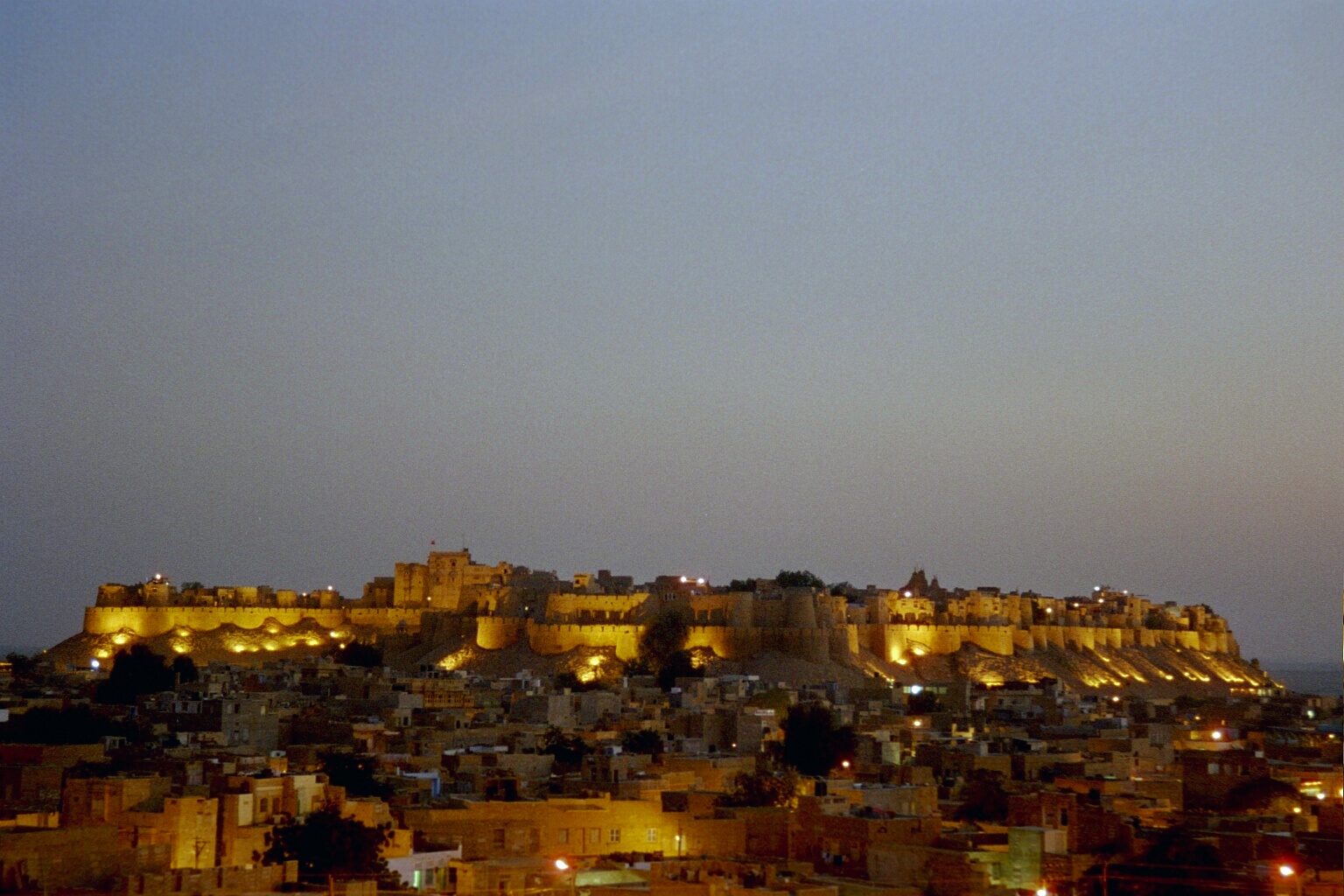
A living golden fort at the edge of the Thar

The blue city below Mehrangarh Fort
Shape your own journey Tell us your dates and what you hope to feel. We draw the route around you. Begin Not sure where to start? We match the land to your month, your pace and the people travelling with you. Begin Talk to a planner A first route and an indicative price within one working day. No payment to start. Begin